
Genetic studies suggest that repurposed drugs can prove to be a cheaper treatment for type 2 diabetes
People with type 2 diabetes are primarily treated with synthetic insulin. But a new study suggests that medicine originally meant for treatment of other diseases can potentially be used for type 2 diabetes.

More than 500 million people suffer from type 2 diabetes – slightly more than 6% of the world’s population. Type 2 diabetes, in short, results in the body becoming less receptive to the insulin hormone along with the body’s own insulin production being reduced.
This results in chronically high blood sugar levels as the body cannot regulate the blood sugar. A high blood sugar can result in various forms of physical discomfort; tiredness, thirst, frequent urination, headaches and overall general discomfort – just to name a few examples. But besides these various discomforts, untreated high blood sugar can lead to serious complications.
Blood sugar and insulin
When you eat or drink food with carbohydrates the body’s blood sugar rises. The insulin counteracts and regulates this, so the blood sugar stays on a stable level. People with type 2 diabetes suffer from chronically high blood sugar, as the body is either unable to produce enough insulin or does not react adequately to the produced insulin to stabilize the blood sugar.
Some persons with type 2 diabetes are treated with synthetic insulin, which they themselves inject to regulate their blood sugar levels.
Type 2 diabetes: A hereditary lifestyle disease
Type 2 diabetes is a lifestyle disease which can be caused by an unhealthy lifestyle. People with an unhealthy diet and who eat more calories than they burn raise the body’s blood sugar levels. This is normally when the insulin comes into play to lower the blood sugar levels. But if a person has led this lifestyle for several years, the body will not be able to keep up – it simply cannot produce enough insulin, and the body becomes resistant to the insulin hormone.
The disease has a high heritability, estimated at 40 – 70%, which means that various genetic factors play a key role in the risk of developing the disease. People whose parents suffer from the disease can lower the risk of they themselves developing the disease with a healthy lifestyle – but due to the high heritability it can never be guaranteed that a person will not develop the disease.
Type 2 diabetes is a complex disease that can result in several grievous complications, among others: cardiovascular diseases, diabetic retinopathy and chronic kidney disease. It is therefore imperative to receive appropriate treatment for the disease to prevent these complications.
Study shows several drugs as candidates
A study performed by researchers at Aarhus University and Aalborg University has explored the possibilities of repurposing drugs to see if it is possible to find alternative treatments to the disease.
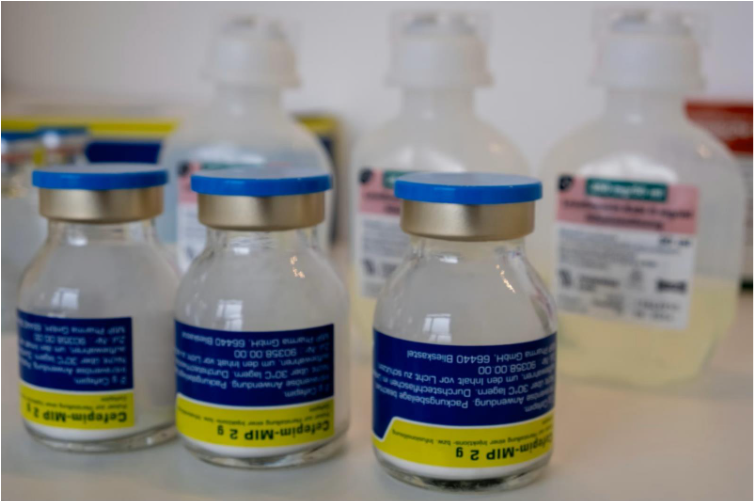
Repurposing of drugs means that the researchers have examined if drugs meant to treat other diseases could prove to be effective at treating type 2 diabetes.
The researchers have not analyzed genetic data from individuals with type 2 diabetes. Instead, they used the results from very large genetic population studies – the so-called genome-wide association studies (GWAS) - which shows exactly which genetic variants are coupled with the increased risk of type 2 diabetes.
From these genetic correlations the researchers could identify the specific genes that play a crucial role in the disease. Afterwards they examined which known drugs that affect these specific genes and the biological processes that the genes are included in.
In short, the genetic ”fingerprints” that have been produced from the big population studies have been used to couple type 2 diabetes with existing drugs – without testing the drugs on actual patients. This makes it possible to identify drugs already approved for the treatment of other diseases that might also influence the biological processes behind type 2 diabetes.
The researchers did not just find single genes, but entire groups of genes affected by specific drugs, which together account for a large part of the genetic risk for type 2 diabetes. This means that the biological processes, which these drugs affect, seem to play a crucial role in the development of the disease.
One of the promising drugs that the study found was a drug normally used for the treatment of increased cholesterol. The results indicate that this drug affects genetic processes also involved in type 2 diabetes. This potentially enables new possibilities for using existing drugs for new treatment purposes in the future – in this case: the treatment of type 2 diabetes.
“The study doesn’t suggest that we can put new drugs to use tomorrow, but it demonstrates how genetic studies can be used in prioritizing the most promising candidates way earlier in the research process. In the future this can enable faster and cheaper research for treatments” says associate professor Palle Duun Rohde, who is one of the driving forces behind this study as well as the leader of research at Genomic Medicine at Aalborg University.
Advantages of repurposing drugs instead of developing a completely new synthetic drug
One can wonder why it is preferable to use a repurposed drug instead of just developing a new and specialized drug for the treatment of a disease. But the advantages are actually fairly big:
If a repurposed drug is proved viable to be used for the treatment of a disease, the drug is already to be on the market – which means that it often must go through fewer and shorter clinical trials compared to completely new drugs. This way the drug can be put to use quicker than a newly developed drug.
Besides, the potential side effects of the repurposed drug are already well-known along with the ways to treat these.
Lastly it is significantly cheaper to use a repurposed drug as the development of new drugs can often cost billions. When a drug is expensive to develop, it is most likely expensive for the patient to purchase.
A well-known example of a repurposed drug is thalidomide. This drug was originally developed for the purpose of being a sedative for pregnant women to counteract insomnia and nausea. It was then retracted as it proved to cause severe birth defects. Later it was discovered to be an effective drug to treat a specific type of cancer along with some skin diseases.
A hypothetical study
The study’s focus has been on drugs where a genetic correlation with type 2 diabetes could be proved, and the study can therefore not assess the effects of treatments that do not leave a clear genetic signal – for example synthetic insulin. This means that there are potentially several drugs that affect type 2 diabetes which this study has not detected.
Besides this study is based purely on genetic analyses and not clinical trials, which means that the study primarily shows promising candidates and not documented treatments. Therefore, the study does not take into consideration that all patients are different and require different treatments. This means that further clinical testing is required to examine if these alternative drugs work in practice.
Even though this study has not resulted in new alternative drugs being immediately put to use – which was never likely – it has improved and nuanced the prioritization of drugs for future studies. It is a step closer to finding alternative – and potentially cheaper – drugs for the treatment of type 2 diabetes. Perhaps even drugs that could treat both the disease and its potential complications simultaneously.
In short, the study shows that a series of existing drugs have the potential to be used in the treatment of type 2 diabetes, which can save both time and money compared to developing entirely new medicinal treatments.
Additional information
We strive to ensure that all our articles live up to the Danish universities' principles for good research communication (scroll down to find the English version on the website). Because of this, the article is supplemented with the following information: | |
Study type | Genetic association study |
Funding
| This project was supported by the Novo Nordisk Foundation through the Open Discovery Innovation Network (ODIN) drug discovery platform under grant number NNF20SA0061466. |
Collaborators
| Center for Quantitative Genetics and Genomics, Aarhus University, Aarhus, Denmark: Astrid Johannesson Hjelholt, Tahereh Gholipourshahraki, Zhonghao Bai, Merina Shrestha & Peter Sørensen Steno Diabetes Centre Aarhus, Aarhus University Hospital, Aarhus, Denmark & Department of Clinical Pharmacology, Aarhus University Hospital, Aarhus, Denmark: Astrid Johannesson Hjelholt & Mads Kjolby Department of Endocrinology and Internal Medicine, Aarhus University Hospital, Aarhus, Denmark: Astrid Johannesson Hjelholt The National Centre for Register-based Research, Aarhus University, Aarhus, Denmark: Tahereh Gholipourshahraki Department of Biomedicine, Aarhus University, Aarhus, Denmark: Mads Kjolby Genomic Medicine, Department of Health Science and Technology, Aalborg University, Aalborg, Denmark & Department of Clinical Genetics, Aalborg University Hospital, Aalborg, Denmark Palle Duun Rohde |
Conflicts of interest | The authors declare no competing interests. |
Read more
| |
Contact | Associate professor Palle Duun Rohde: palledr@hst.aau.dk |